by Laurel L Russwurm | work in progress
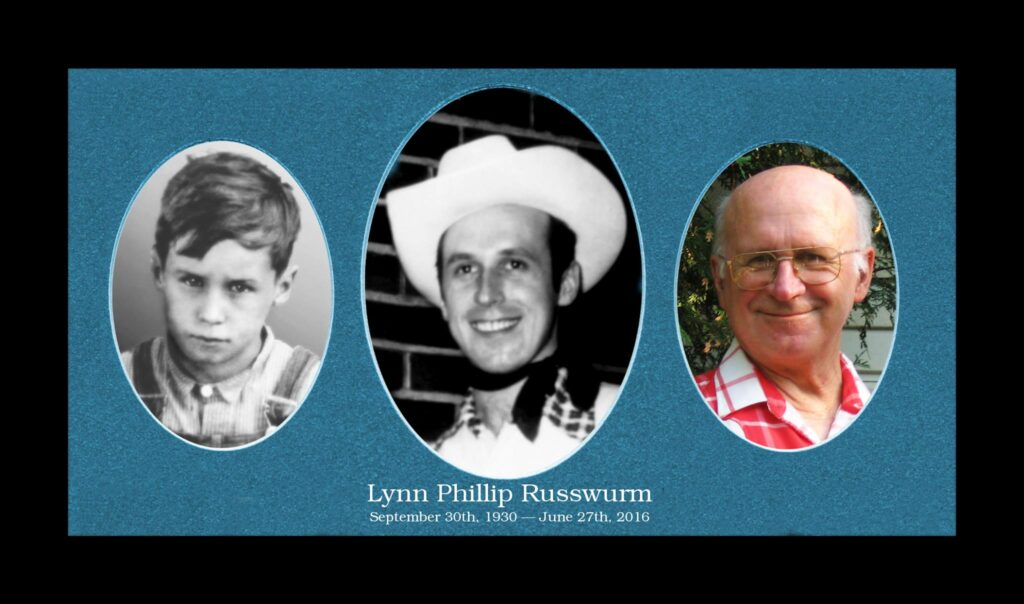
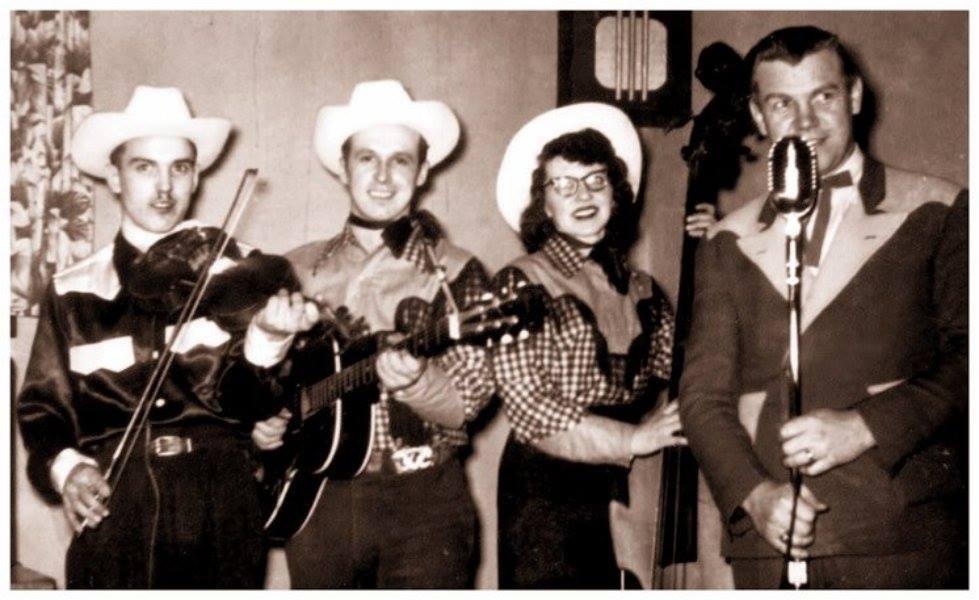
No doubt inspired by the CKNX Saturday Night Barn Dance, my father, Lynn Russwurm, started writing country songs while still in his teens in the 1940’s. The live country music radio show began broadcasting in 1937 from Wingham’s CKNX Radio station. The program built its fan base by putting on live Saturday Night Barn Dance shows in communities throughout the southern Ontario listening area.
On the night Dad took a girl to what I believe was his first visit to a live CKNX Barn Dance Show, he told me he didn’t know if the song he had mailed to CKNX had even reached Ernie King, the show’s young “heartthrob.”
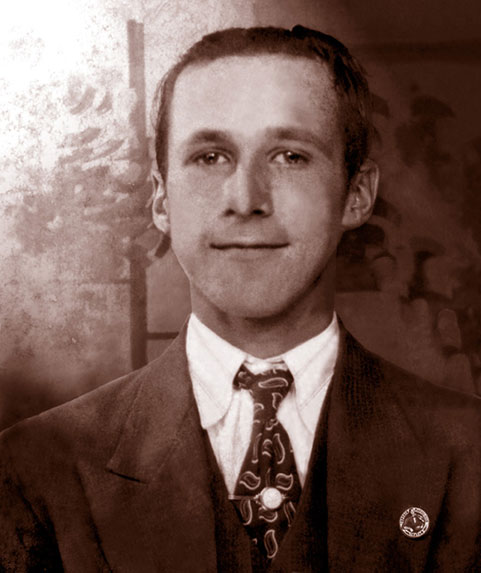
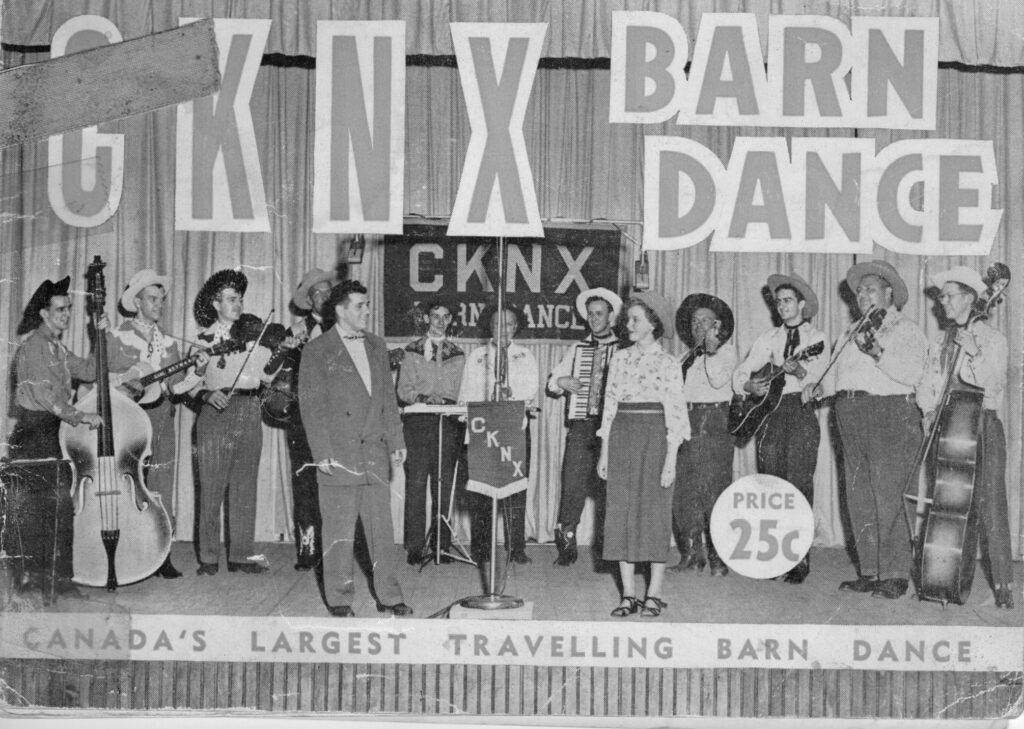
But he knew it when Ernie King got up and sang, “In Our Dreamboat Let’s Pretend” live onstage for the very first time.
For my dad it was magic. Even better, he got paid for the privilege: it was the very first song he ever sold. Although the song became Ernie King’s signature tune on the CKNX Barn Dance, Lynn never received any royalties since Ernie, like many Canadian musicians, never recorded.
But that was just the beginning of Lynn Russwurm’s music career. Lynn was a good musician who wrote, performed and sometimes sold his own music from the 1940’s onward.
Lynn Russwurm’s first country music band was called the Pine River Troubadours. When his first wife, Laura Gaede, joined the band, he marketed their duo as the Pine River Sweethearts.
Based in the Kitchener Waterloo area, the Pine River Troubadors played in venues throughout the area, ranging from ‘s CHML Main Street Jamboree in Hamilton to Wingham’s CKNX Barn Dance Shows.
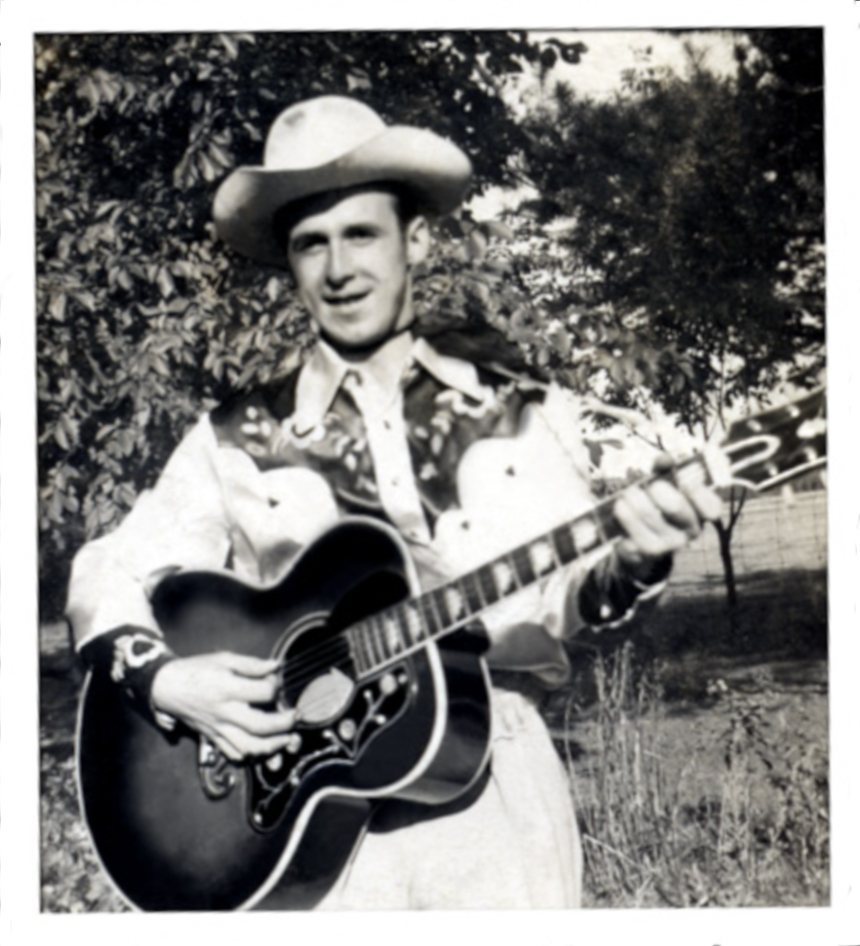
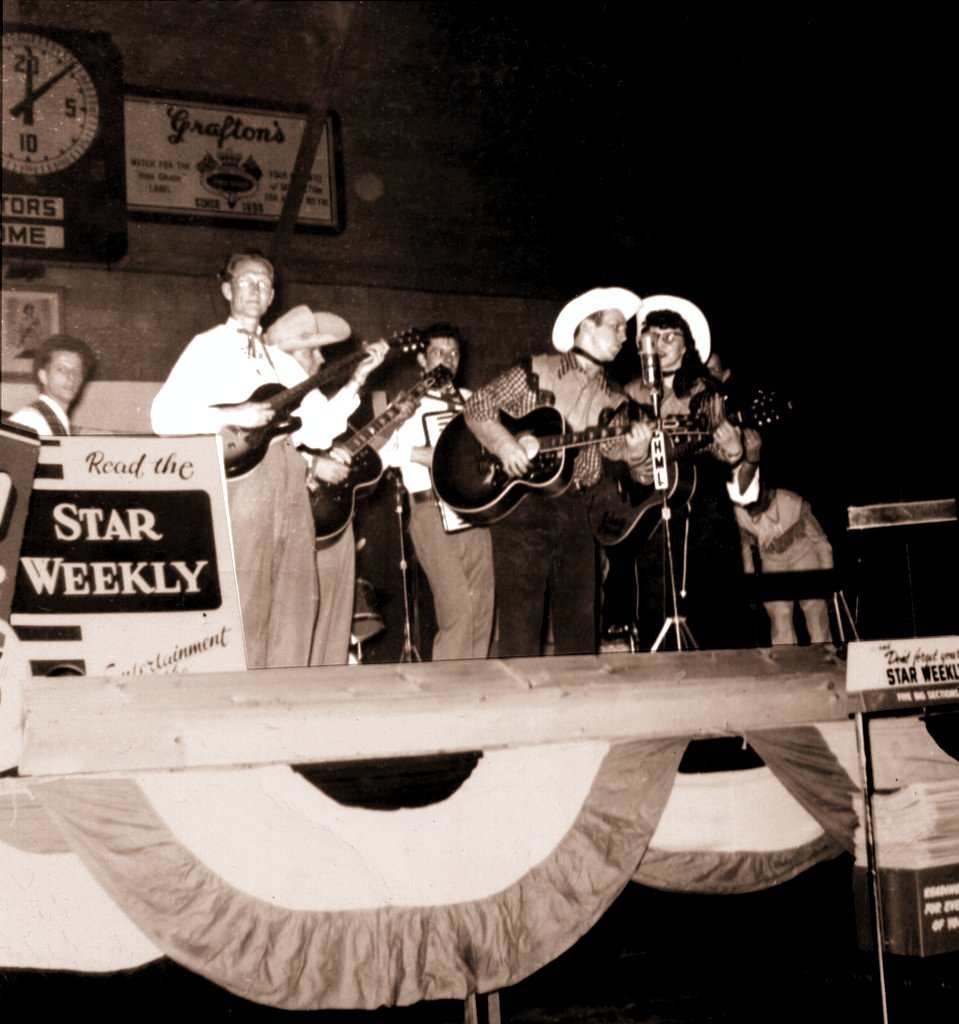
To promote local country music (and, coincidentally his own band), Lynn hosted a local radio show, on which their eldest son Lance made what was likely his professional musical debut while still in elementary school.
While raising their family, Lynn closed down the band and Laura stayed home with the kids. On weekends Lynn played in other local country bands throughout the 1960s. When the kids were older, launching the Hummingbirds, his new family band.
As well as writing and selling his own songs, he co-wrote songs with other recording artists over the years.
During my childhood, Dad was often up late writing songs, or the letters he wrote trying to sell them. In the 1960’s, Lynn and Laura made a pilgrimage to Nashville to network in hopes of selling more.
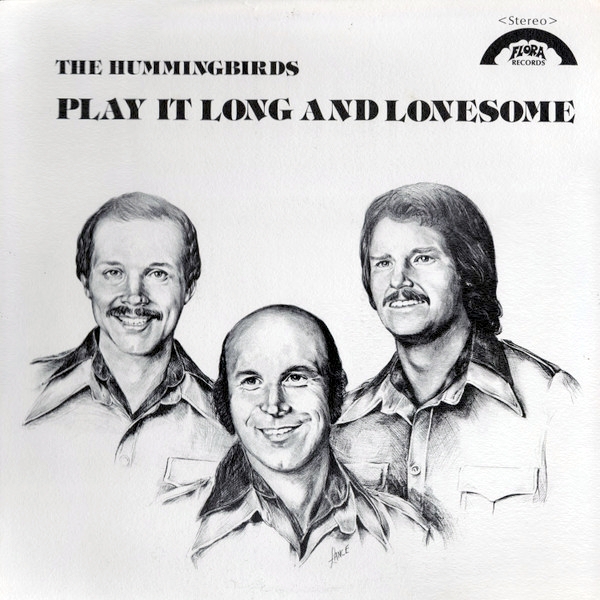
Although others had recorded his music, Dad didn’t get his own chance to record any of it it himself until the 1970s. “Play It Long and Lonesome,” an album of his own songs, performed by his family band, “The Hummingbirds” was set to be produced by Columbia Records.
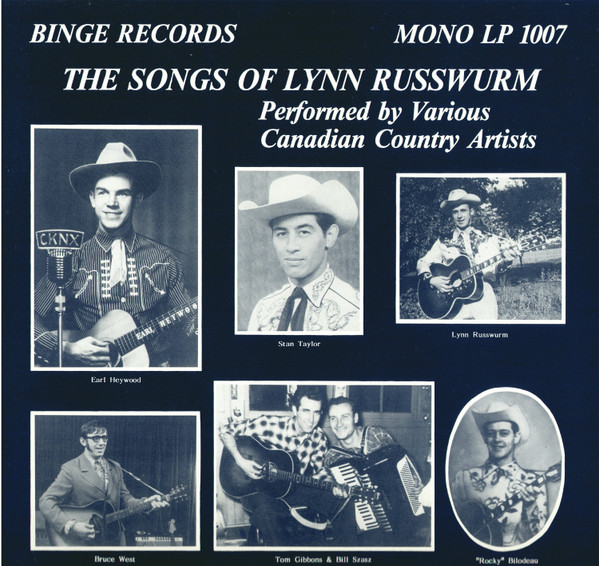
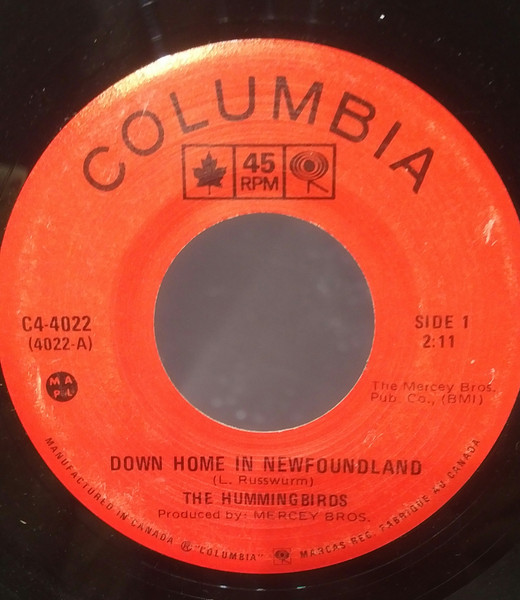
The initial release of two of the album’s most commercial singles, “Down Home In Newfoundland,” and “Drifter” were meant to introduce the record to radio audiences.
But when the singles didn’t perform as well as expected, Columbia pulled out of the deal, and Copyright ownership reverted to Dad.
Instead of letting it end there, Dad sold his prized collection of Country Music 78’s to finance recording the rest of the album at the Mercey Brothers Recording Studio in downtown Elmira. He self published the album on his own “Flora Records” label.
Although Lynn never struck it big, he kept networking, playing, singing, and selling the odd record or two while performing throughout southern Ontario.
With the advent of audio cassettes, CDs and digitization, the cost of recording records came down, and Lynn became a local record producer, capturing some of the work of talented country artists who had never recorded.
After retiring from his “day job,” Lynn financed his personal Country Music record collection with profits earned in the lucrative collectable used record sale and auction business.
In his later years, Lynn realized much of the soundtrack of his youth was starting to disappear, so he begun working to preserve the country music that he loved.
Lynn Russwurm was one of the original founders of the CKNX Barn Dance Historical Society & Entertainment Museum, a volunteer organization intended to keep their music heritage alive by putting on revival CKNX Barn Dance shows, which would also provide a showcase for the next generations of performers.
Lynn was involved, both performing in and running the Barn Dance Band, putting on Barn Dance Shows and Camp Outs, producing Barn Dance CDs and a DVD, and writing his “Boots and Saddles” historical column in the news letter.
When Lynn’s second wife, wife, Shirley Mercer Russwurm, became president of the CKNX Barn Dance Historical Society & Entertainment Museum, her primary focus was working to establish an actual brick and mortar Barn Dance Museum.
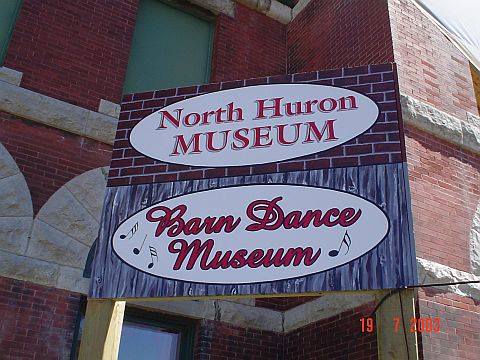
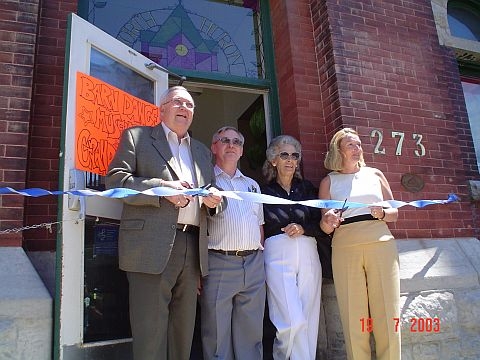
The Museum was based in the basement of the North Huron Museum located in the CKNX hometown of Wingham, Ontario until the North Huron Museum closed its doors.
After a lifetime in the music business, Dad didn’t really expect anything much from royalties. He once told me the purpose of records was to get people to come to the shows you played in.
My understanding was that Dad’s royalties, if and when they came in, were more likely to number in dollars than hundreds of dollars.
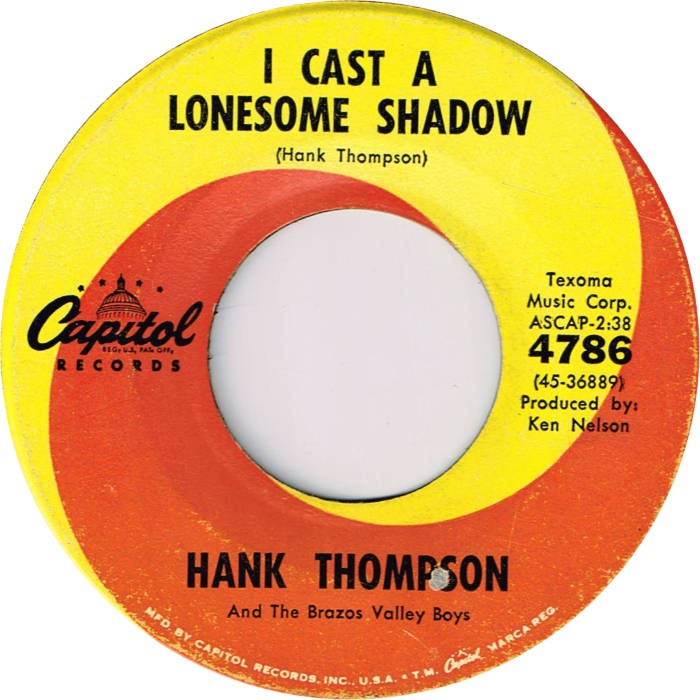
The only exception to this was when British rock star Martin Gore (Depeche Mode) covered “I Cast a Lonesome Shadow,” a song Dad had co-written with American Country Music star Hank Thompson.
Dad was happy that music he grew up with recorded on 78s, was no longer locked under copyright. This meant he could help preserve the music he loved.
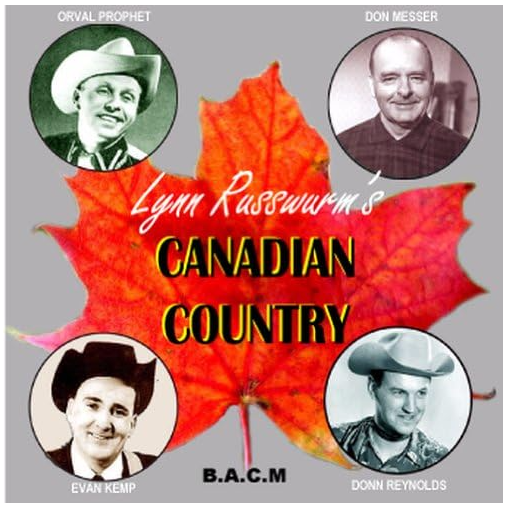
Before selling his considerable Canadian Country Music record collection to Library and Archives Canada, Dad pulled together recordings from his collection to create a series of four traditional Canadian country music compilation albums issued as “Lynn Russwurm’s Canadian Country Music, Volumes 1 – 4” published by the British Archive of Country Music (BACM).
Lynn also volunteered his expertise, contributing artwork, memorabilia, liner notes, tracks etc.) for a variety of other BACM recordings, allowing it to release a lot of otherwise lost Canadian country music on CD (and now digital downloads) to the world.
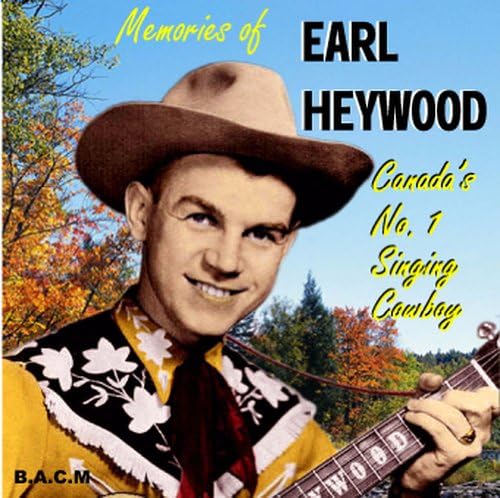
These projects included a collection of music from another major Southern Ontario country music venue from his youth, Hamilton’s Main Street Jamboree, as well as an album of early music from CKNX Barndance headliner, Lynn’s friend and occasional co-writer,
Earl Heywood: Canada’s No. 1 Singing Cowboy. Others included Jack Kingston: The Canadian Playboy, Evan Kemp: Beautiful Nicola Valley, and Stu Davis: Canada’s Cowboy Troubadour.
Over the years, Dad and I had discussions, sometimes joined by my husband Bob and our son Willem, about one day releasing all of his solo music under a Creative Commons Attribution license.
Although Dad really liked the idea, he didn’t want to do it until he and Shirley were both gone, just in case another song hit it big.
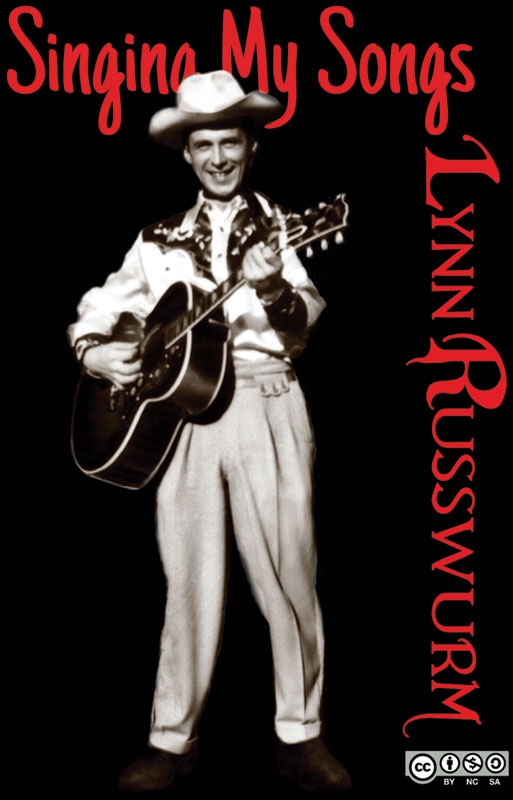
Dad did release his final album, the solo CD “Singing My Songs” under a Creative Commons license.
Lynn Russwurm’s main reason for wanting to make his music freely accessible, not just to his family, but to any artist who wanted to use it in their own projects, was to keep his musical legacy alive.
No one knew knew how much effort he had put into creating and promoting his own work better than he did. And he had watched first hand as the biggest stars of his country music era began disappearing from the scene after they were gone.
Dad understood that releasing his music with an Attribution License would allow the next generations to use and remix his work, keep his music alive and circulating, and hopefully ensure his life’s work didn’t sink into obscurity. He would still get credit, his music could live on, and maybe even grow if other artists used it in their projects.